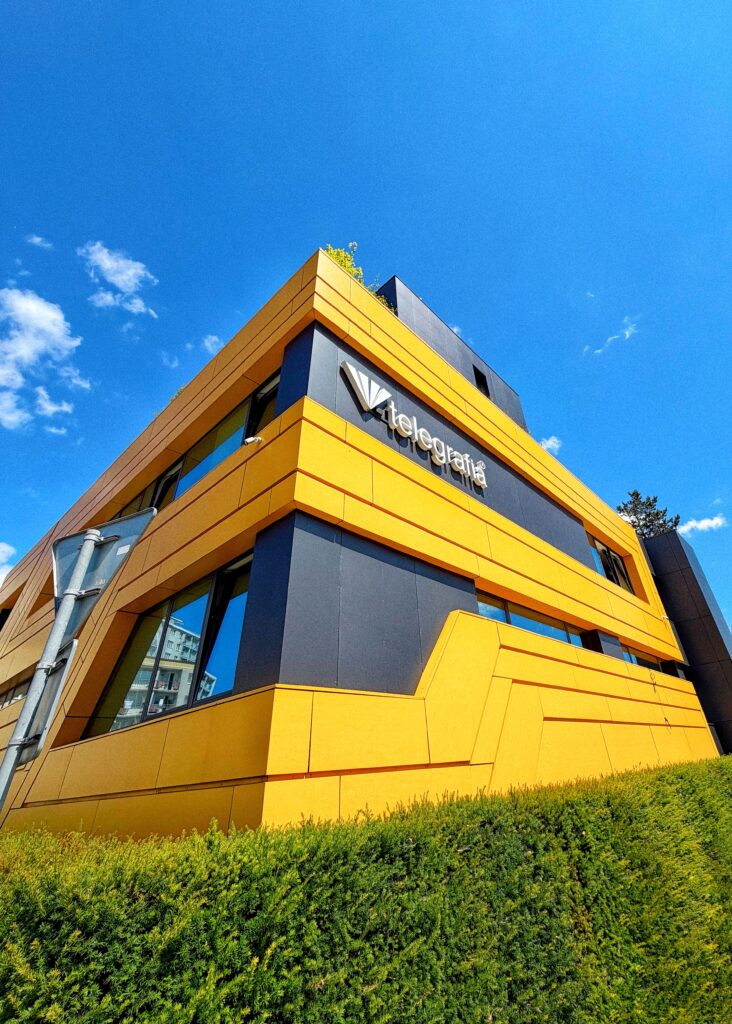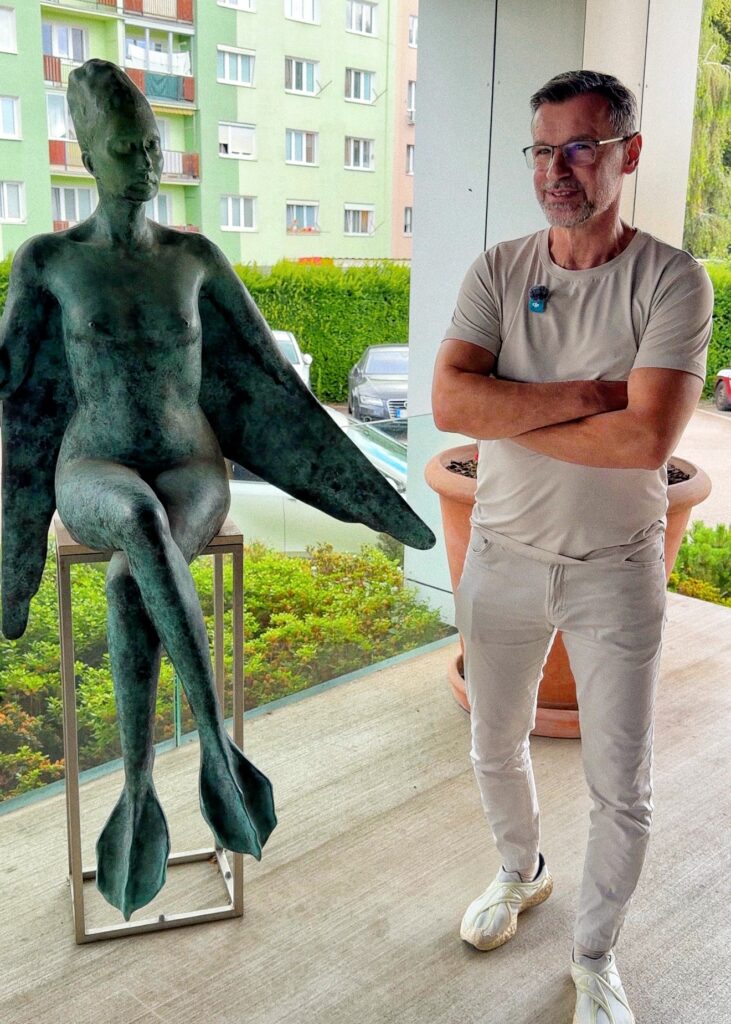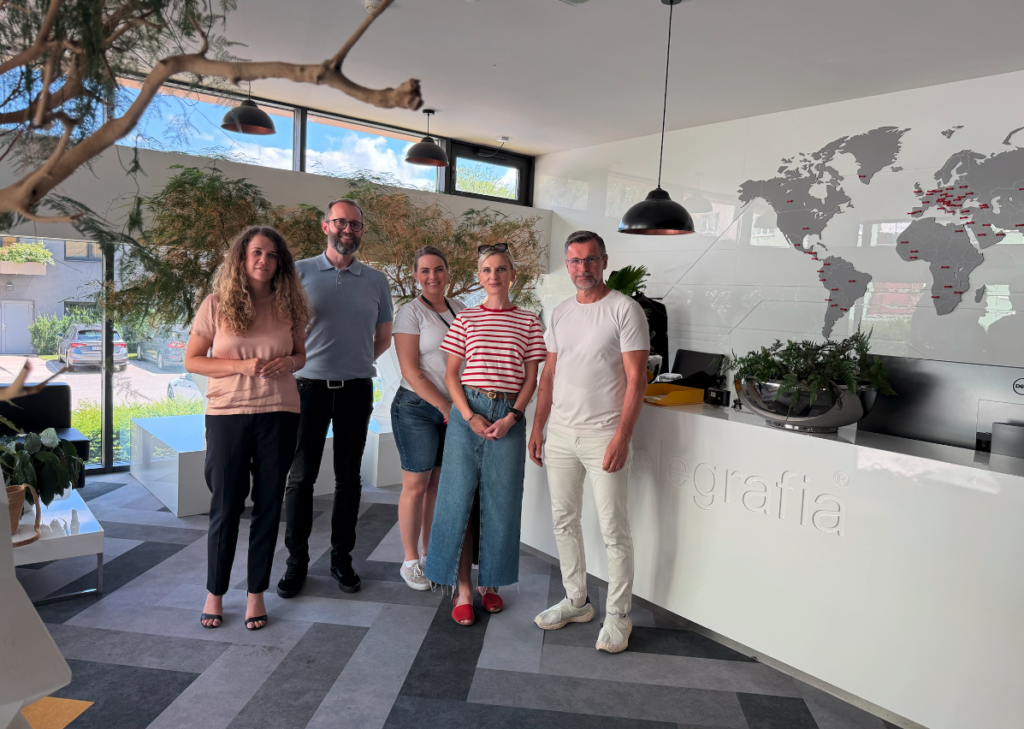
Right at the entrance, together with the company’s CEO, Peter Marčák, we were welcomed by an unusual company totem. A siren. Every morning, employees and visitors encounter it at a company that develops and manufactures sirens, warning systems, as well as enterprise information software.
In the case of Telegrafia, good work largely speaks for itself, so we knew that we had entered the best company in the world in its field. Marketing Specialist Miroslava Malachovská joined us for the tour. Right afterwards, we took a look at the main production area in the seven storey building. This is where the products are finalised. During our visit, sirens were being prepared for shipment.
A siren as a technological puzzle
An electronic siren consists of several modules that are gradually assembled into a control cabinet. Telegrafia manufactures three product lines, but practically no two orders are the same. Each siren is configured according to the specific project, location, method of communication and customer needs.
Once delivered to Košice, the modules are activated, configured, calibrated and subsequently assembled into the final solution. The production of one siren takes approximately one hour, while activation and testing take from thirty minutes to two hours depending on the type of device. In three months, the company can manufacture approximately 1,300 sirens for a single customer.
All devices have a backup power supply so that they continue to operate even during a power outage. They can be connected to radiation sensors, water level sensors or other monitoring elements. The system then sends data to the control centre, which can activate the sirens, send SMS messages or enter radio broadcasting through RDS.
The solutions are used by state administration, local governments and companies with hazardous production. Sirens from Košice protect people in Slovakia and abroad today. Telegrafia has delivered more than 2,600 sirens for the Slovak national warning system, more than 500 sirens for mining systems in Brazil and hundreds of devices for tsunami warning systems in India, Malaysia and French Polynesia.
Production visible in real time
Project Manager Peter Gorej introduced us to the Business Central information system, which the company has been using since 2007.
Every employee can see their orders and tasks in the system. After scanning the QR code on a motherboard, we immediately accessed information about the specific product and its current status. The assembly of a siren is divided into individual stages, making it possible to track in real time where an order currently is and what still needs to be done.
The company’s current production facilities are no longer sufficient. Telegrafia is therefore preparing new capacities where robotic arms are also expected to assist with siren assembly.
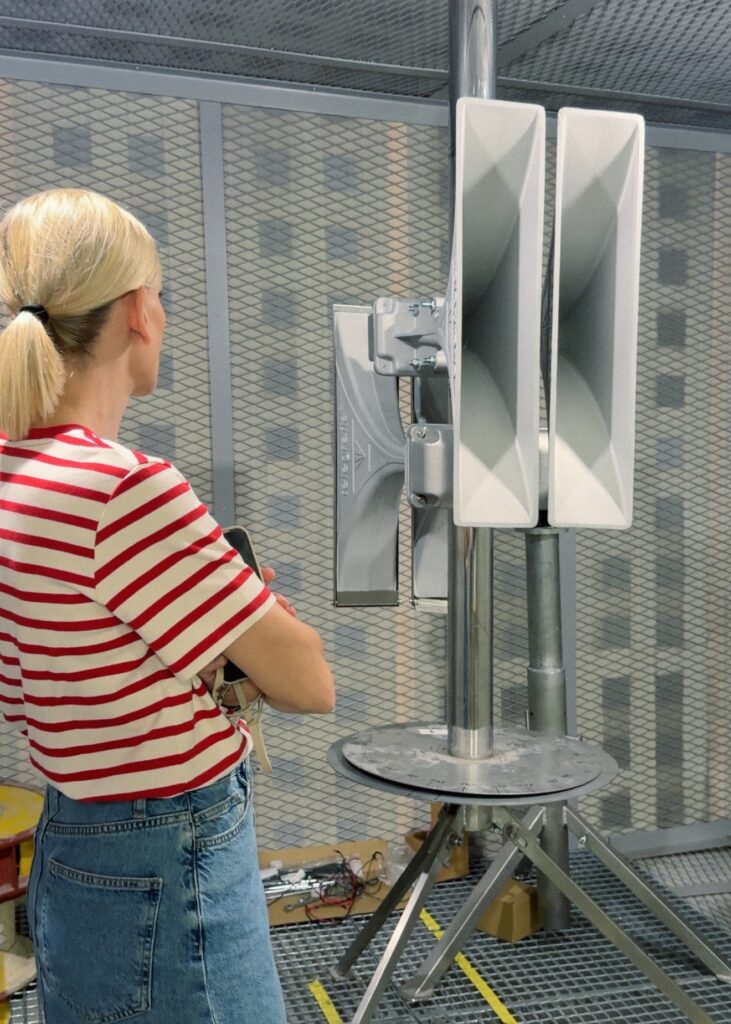
One of the most interesting stops was the anechoic chamber. Its thick walls absorb sound, allowing developers to precisely test new loudspeakers, their performance and sound direction. We also visited the hardware development, design and testing department.
The official lifespan of the sirens is approximately ten years, but the company also has records of devices more than twenty years old that are still operating. The sirens must meet strict legislative requirements and remain operational even for several days after a blackout.
More than a manufacturing company
Telegrafia is not only a manufacturer of warning systems. Katarína Kleinová, Team Leader of the ERP team, also introduced us to the company’s second pillar, the implementation of Microsoft Dynamics 365 Business Central enterprise solutions for Slovak companies.
It is an enterprise information system that connects all important company processes within a single environment. From purchasing, sales and warehouse management through production, finance and accounting to service and project management. Employees therefore work with a single set of data instead of multiple disconnected systems and manual spreadsheets.
Telegrafia provides the complete implementation of the solution, its adaptation to customer needs, user support, regular updates and integration with other systems, including production lines. The solution also includes its own extensions for Slovak legislation, management reports and connections to other enterprise applications.
The ERP team helps companies digitalise processes, automate routine activities and gain a better overview of how the business operates. Thanks to up to date data, managers can make decisions faster and more efficiently.
Approximately one hundred people currently work at the Košice branch. Other colleagues work in Bratislava and Zvolen, where they operate as service centres.
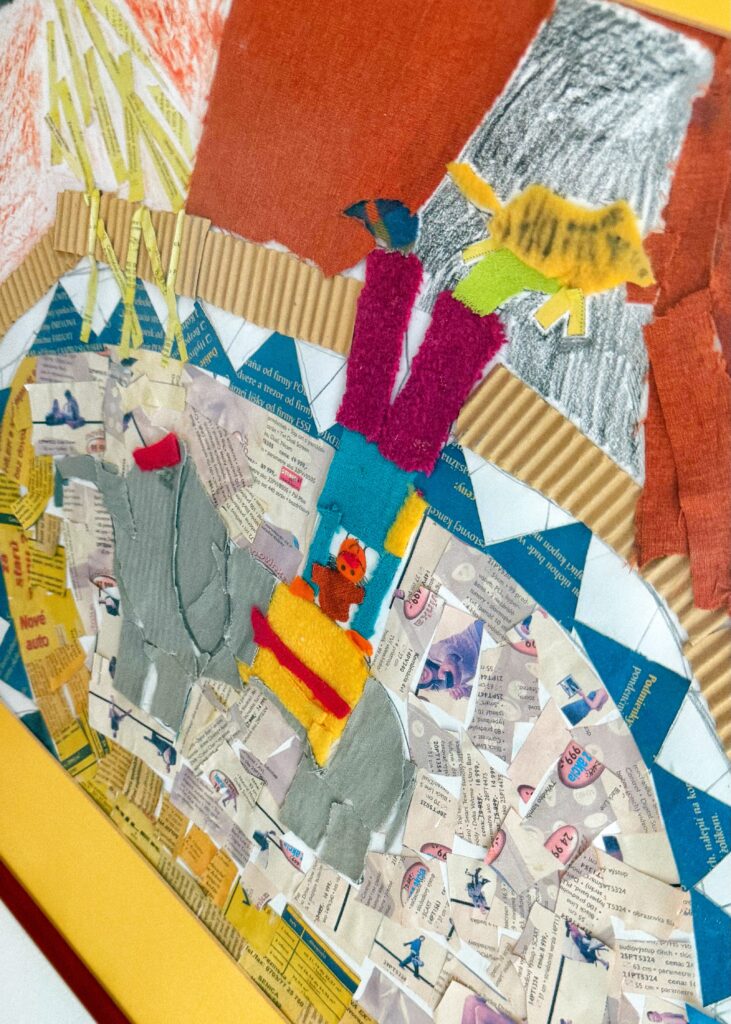
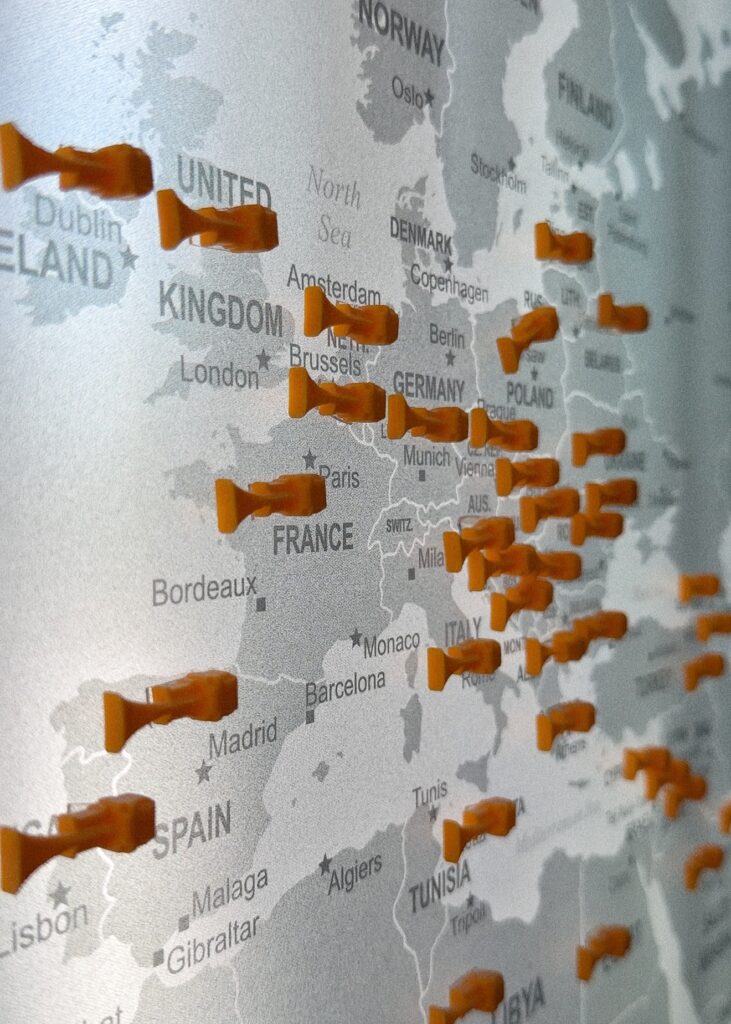
Sirens are present practically everywhere in the company. On maps, signs and large pop art paintings in common areas. The corridor walls are also decorated with children’s artwork from a school that Telegrafia financially supported.
A company that remains part of the community
A favourite place for company breakfasts, conversations or yoga is the terrace overlooking the surrounding area. On the highest floors of the building, you will find table football, kettlebells and a cycling trainer. There are pull up bars on the intermediate floors, which employees regularly use. Although the building was originally supposed to have another lift, the company eventually abandoned the idea. Many employees spend most of their working day sitting, so they see the stairs as a natural opportunity for movement.
The company organises January gatherings instead of a traditional Christmas party, shared breakfasts, summer celebrations and events for entire families, whether it is St. Nicholas Day, puppet theatre or creative workshops.
For approximately thirty years, the company has primarily supported children’s homes, people facing difficult social circumstances and people in need.
It started in 1997, when Radoslav Dráb asked for a video recorder for a children’s home to be repaired as part of his project. From one repair, long term support gradually developed. Today, Radoslav works in Telegrafia’s marketing department and is dedicated to charity full time, where he works on a project focused on the development of social housing.
Peter Marčák believes that the company should give back part of what it has managed to build to the community in which it grew. For many years, they did not speak publicly about this support. Gradually, however, they realised that their own example could inspire others as well. Although Telegrafia’s products are heard mainly at times when something serious is happening, the story of the company itself sends a signal that a successful technology company can grow globally while remaining firmly rooted in the community from which it emerged.